
How to Get Your Cat to Actually Use Their Bed (It's Not What You Think)
The bed probably isn't the problem. But the shape might be.
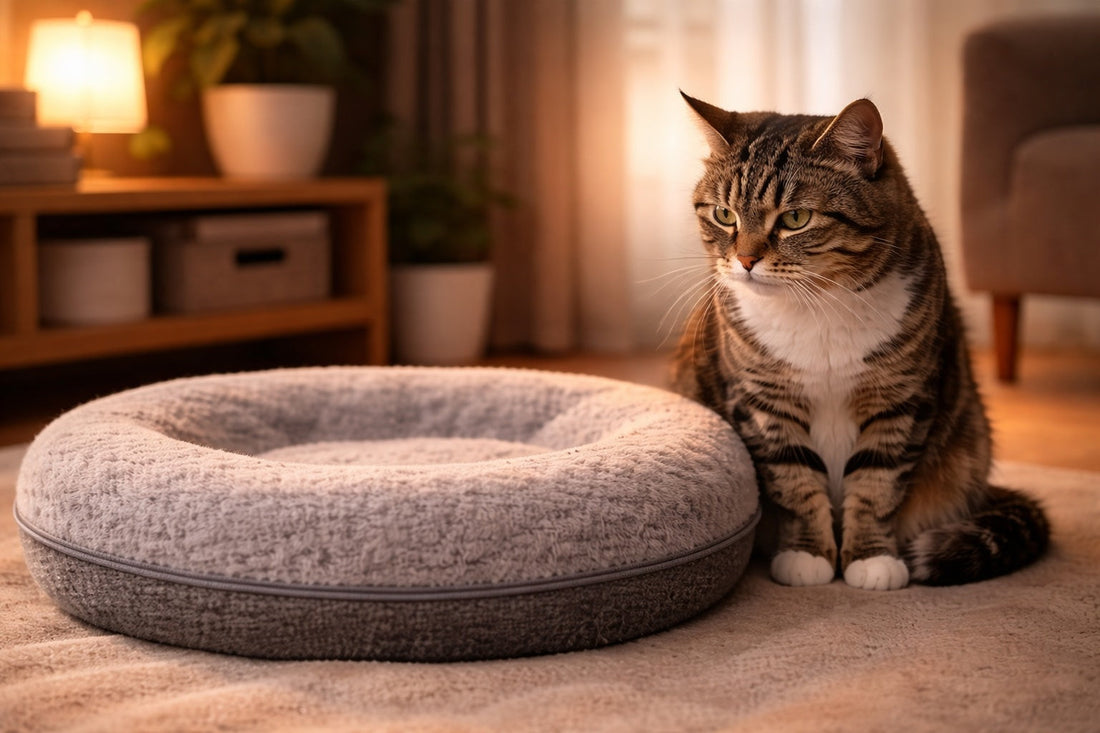
You bought a cat bed. A good one, maybe even an expensive one. Your cat walked over, sniffed it once, and hasn't looked at it since. Now it sits in the corner of the room like a very soft piece of furniture you bought for yourself.
If you're trying to figure out how to get your cat to use their cat bed, you've probably already read the usual advice: try catnip, try a heating pad, move it to a sunnier spot. Those tips aren't wrong. But they're treating symptoms. The actual problem, in most cases, is the shape of the bed — and no amount of catnip fixes a shape problem.
The Real Reason Cats Ignore Most BedsYour Cat's Instincts Are Rejecting the Design
In our breakdown of what cats actually look for in a bed, we go into the den animal instinct in detail — but the short version is this: cats are wired to sleep in enclosed spaces. Not because they're shy. Because in the wild, a sleeping cat is a vulnerable cat, and vulnerability in the open is dangerous. That instinct hasn't gone anywhere just because your cat lives in a climate-controlled apartment.
Most cat beds are open and flat. Some have low raised edges. A few have walls that come up a few inches. But almost all of them ask your cat to sleep fully exposed — head, body, all of it visible and unprotected. Your cat's nervous system reads that as an unsafe sleep environment and moves on. They're not ignoring the bed to be difficult. They're just doing what their instincts tell them to do.
It's why your cat will sleep in a cardboard box, or wedged into the space between furniture, or tucked into the back of a closet. Those spots feel enclosed. Most cat beds don't.
The Shape QuestionEnclosed Beds Work Differently — and Cat Tunnel Beds Work Best of All
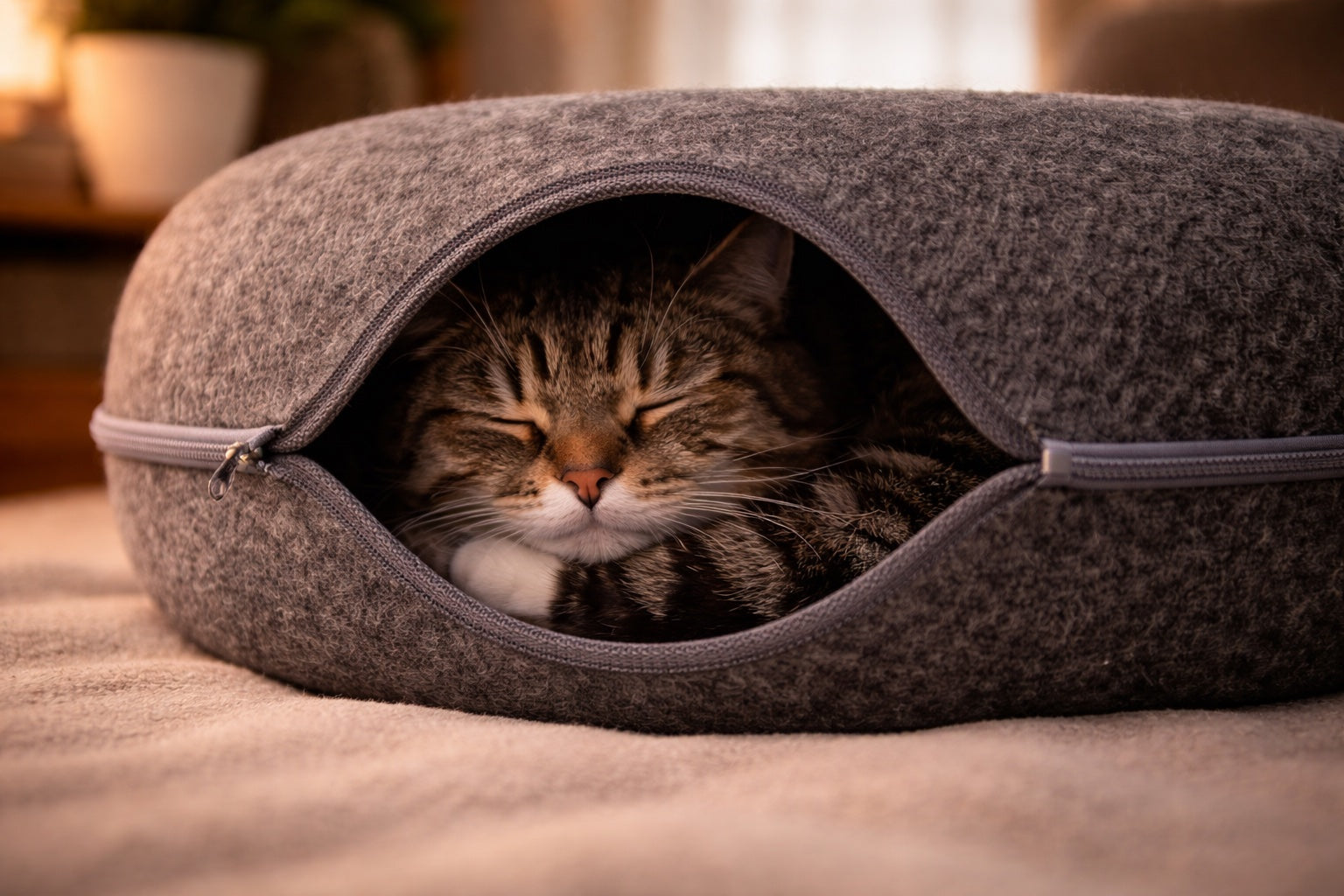
We compared cat cave beds versus regular open cat beds directly, and the difference in how cats respond to each is pretty clear. An enclosed bed — one with walls and a covered top — replicates what a den feels like. The cat can enter, turn around, and feel surrounded on all sides. No exposure. That's the signal their nervous system needs before they'll actually relax into sleep.
A cat tunnel bed goes a step further. The tunnel gives cats something to move through before they settle in, which pulls on hunting instincts and makes the whole thing feel active rather than passive. Cats who'll walk right past a cave bed will often stop and investigate a tunnel bed almost immediately — because the opening draws them in before they've made any decision at all.
 What to Actually Try
Start with Shape, Then Work the Details
If you want to know how to get your cat to use their cat bed, here's the order that actually works:
Switch the shape first. If you have a flat or open bed, that's the issue. An enclosed bed — cave or tunnel style — is where to start. The other tips below work much better once the shape is right.
Put it where your cat already sleeps. Look at where your cat actually rests right now — corner of the couch, under the bed, behind something. Place the new bed near that spot. You're not relocating them; you're giving them a better version of the environment they already chose.
Leave it alone for a few days. Placing your cat in the bed, sitting with them next to it, making a whole production of it — all of this tends to make cats more suspicious, not more interested. Leave it. Let them find it on their own schedule.
Hold off on catnip at first. Catnip can help once a cat has shown some interest, but some cats roll in catnip-scented things rather than sleep in them. Save it for a second step if needed.
Put something familiar inside. A worn t-shirt or a blanket that smells like you can make a new bed feel less foreign. This works especially well for cats who are generally anxious or slow to warm up to new things.
A Few More Things Worth Checking
If you've switched to an enclosed bed, placed it somewhere sensible, and waited a week with no movement — there are a few other factors worth looking at. Some cats have strong room preferences and won't use a bed in certain parts of the house regardless of type. Some do better with multiple options, one near a window and one in a quieter spot. And some cats are just more comfortable elevated — on shelves, chair backs, or high furniture — which a floor bed won't solve.
But those are the exceptions. Most of the time, when a cat ignores their bed completely, the answer is that the bed is asking them to sleep exposed. Fix the shape, and the other variables become much easier to work with.
The Cozy Cat Tunnel Bed is built around this problem — fully enclosed felt construction, with a tunnel that draws cats in before they've decided anything. If you've been watching a perfectly good bed go unused, it might just be time to try a different shape.
See the Cozy Cat Tunnel Bed