Do Cats Like Donut Beds? What Your Cat Is Actually Telling You
Some cats use donut beds. A lot of cats don't. The difference comes down to one thing — and it's not the material, the price, or the brand.
Some cats use donut beds. A lot of cats don't. And if you bought one and watched your cat walk past it for three weeks straight, you probably blamed the cat. You shouldn't.
Whether your cat takes to a donut bed comes down to one thing: how exposed they feel in it.
The shape problem most cat owners miss
Cats are den animals — not metaphorically, but as a function of survival. For thousands of years, sleeping in an enclosed space meant not getting eaten. That instinct doesn't switch off in a domestic setting. Your cat has never seen a predator, and they're still wired to sleep somewhere with walls.
Most beds ask them to do the opposite. Flat mats, plush rectangles, padded cushions — they're comfortable by human logic, but they leave a cat fully exposed. No walls, no overhead cover, nowhere to tuck in. A cat lying in an open bed has to stay alert. That's not rest.
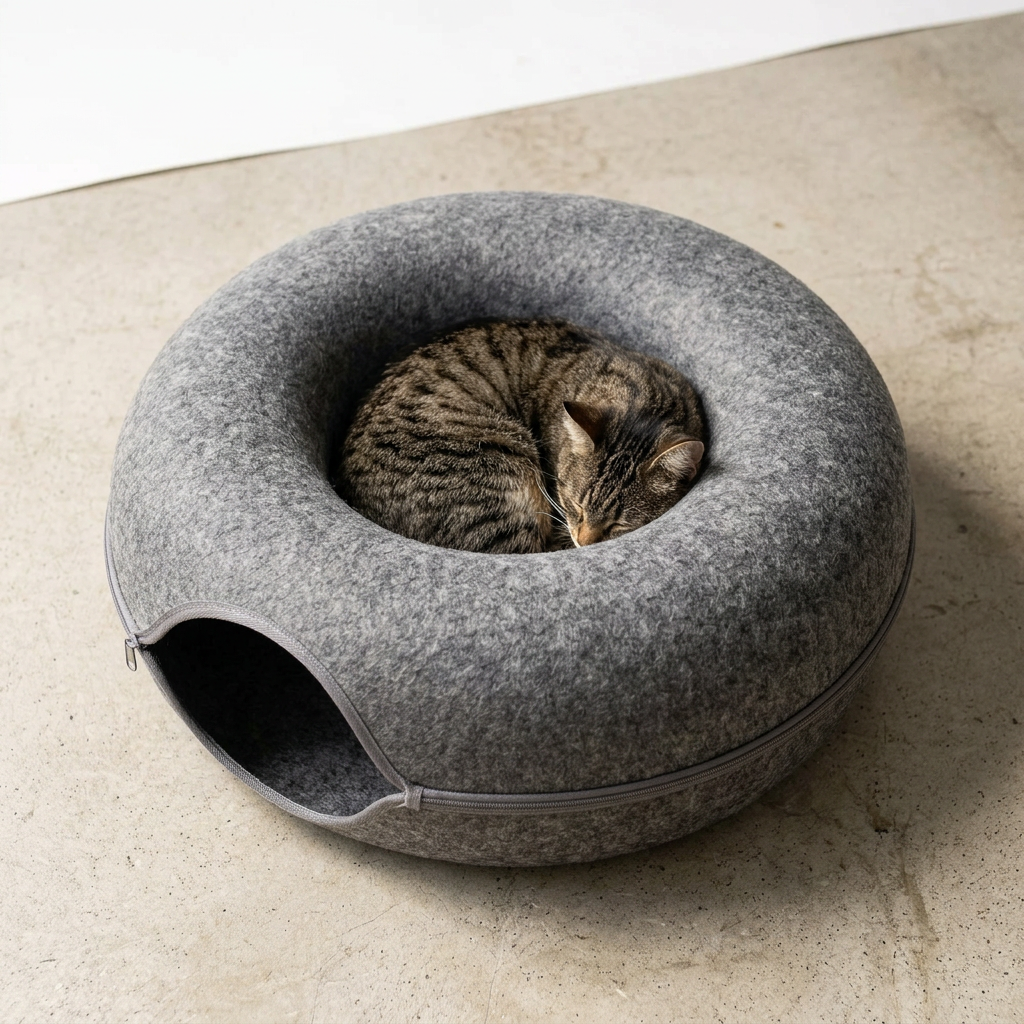
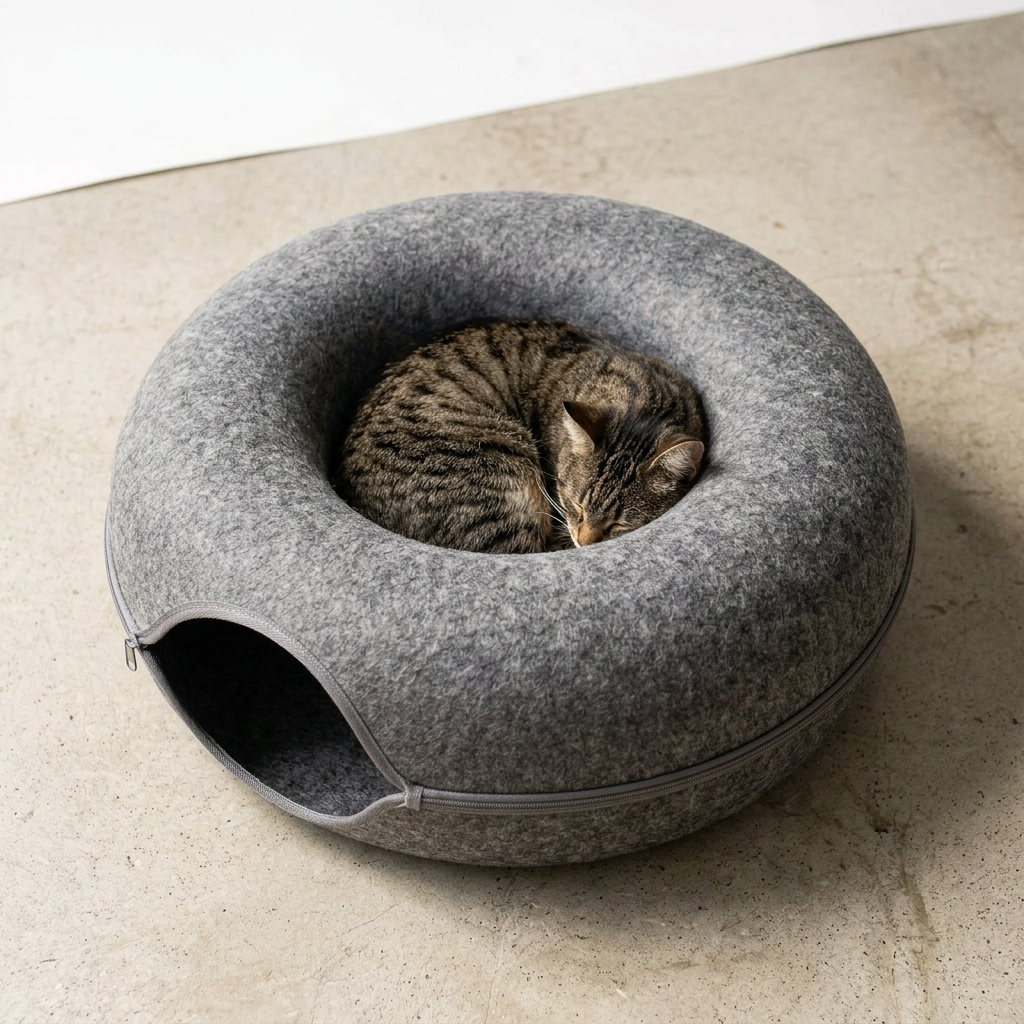
Donut beds are better. The raised sides form a loose ring around your cat's body. For cats that feel generally secure in their space, that partial enclosure is enough — they curl in, press their back against the edge, and sleep.
For cats that run less comfortable — anxious cats, cats in a new place, cats that tend toward hiding — a rim isn't enough. They want overhead cover too.
Why some cats use them and others ignore them
A cat that settles into a donut bed is telling you they feel settled enough that partial enclosure does the job. That's useful information, actually.
A cat that ignores the donut bed is telling you they need more. The open top, no matter how soft the material, doesn't read as shelter to them. They'll walk past it and find a box. Or squeeze behind the couch. Or disappear under the bed for most of the day.
This isn't attitude. It's just what they're communicating.
What actually works for a cat that wants full enclosure
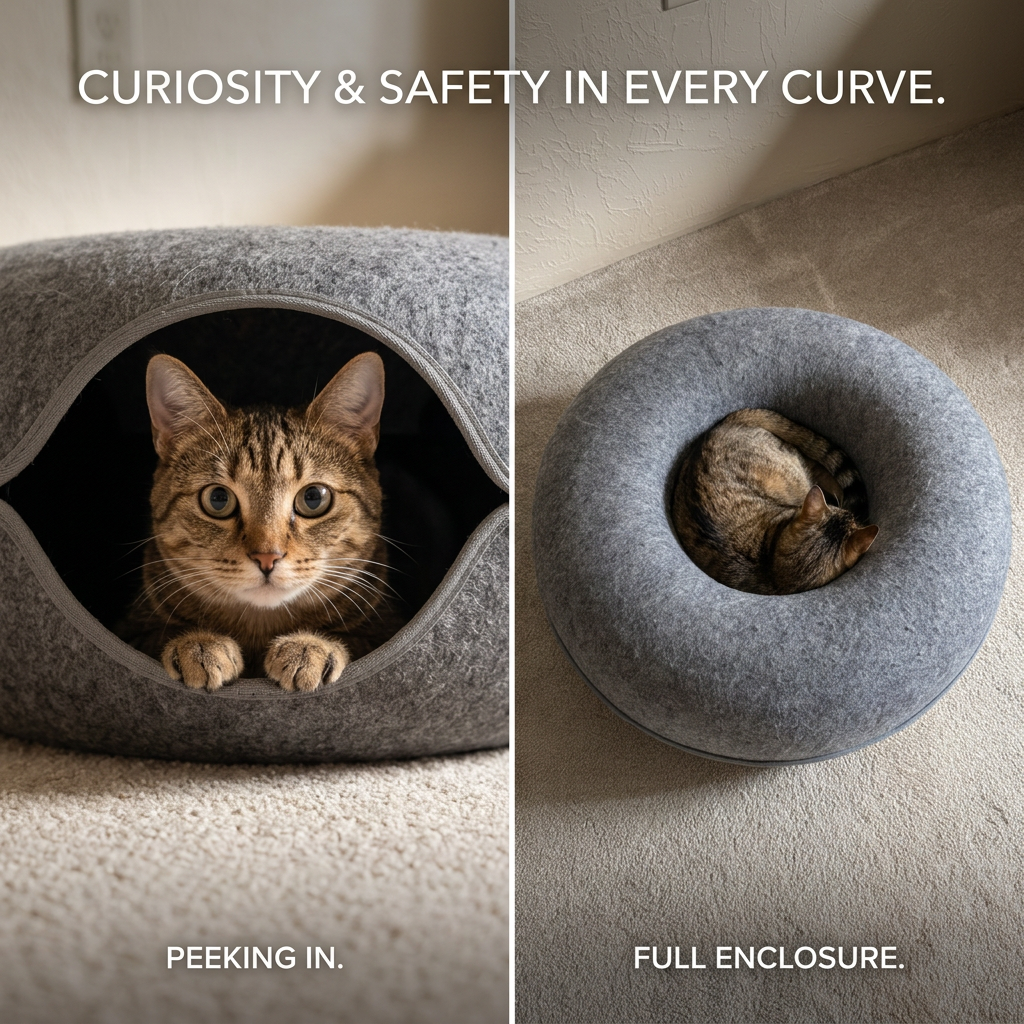
A cat cave bed or a cat tunnel bed solves what the donut bed can't. The roof changes things. Instead of a comfortable spot, the bed becomes an actual den — and cats that have ignored every open bed they've ever been given will often walk into a covered one and stay.
The tunnel design adds something else: the enclosed passageway activates hunting instinct alongside denning instinct. A cat inside a tunnel can watch, wait, and feel secure from every direction. If you want to understand why they respond to it so differently than other bed shapes, our post on cat tunnel beds covers the whole thing.
For the full picture on why cats seek enclosure in the first place — why this is wiring, not preference — start here.
Should you get rid of the donut bed?
If your cat uses it, no. Leave it. It's working.
If your cat has ignored it for more than a few weeks, stop waiting for them to come around. Cats don't warm up to shapes they instinctively distrust — they just keep avoiding them. What they're usually looking for is a roof.
The Cozy Cat Tunnel Bed is made from natural wool felt and has openings on both ends — cats feel safer when they can see an exit. It folds flat for washing. If your cat has been giving the donut bed the cold shoulder, this is probably closer to what they actually need.
Shop the Cozy Cat Tunnel Bed