Best Cat Beds for Large Cats: What Actually Fits a Big Cat Comfortably
Most cat beds are built for a 10-pound cat. Here's what you need if yours isn't.
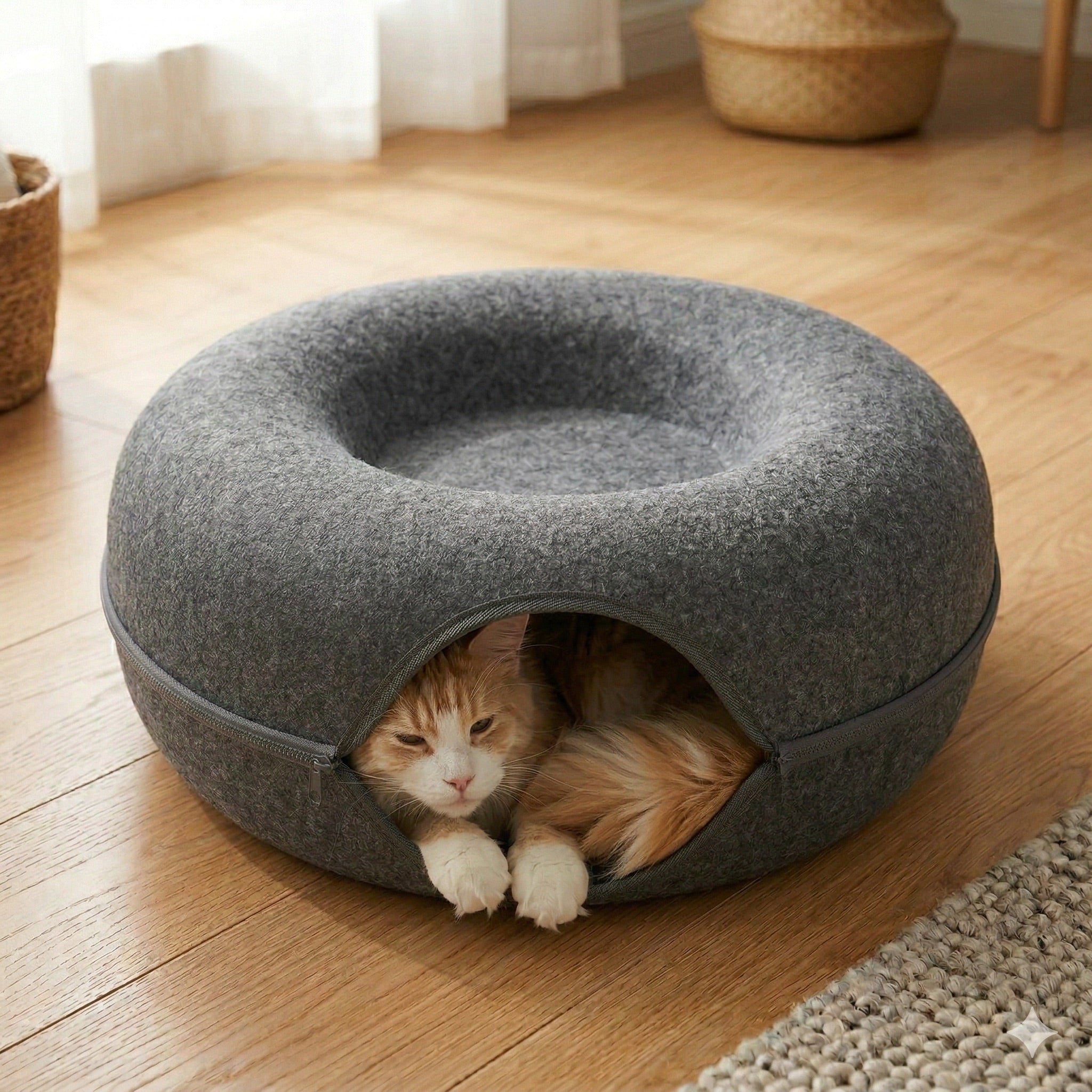
If you have a Maine Coon, a Ragdoll, or a domestic cat who hit 18 pounds before you really registered it happening, you've probably bought at least one bed that turned out to be the wrong size. It looked reasonable in the product photo. On your actual cat, it functioned as a very expensive doormat.
The best cat bed for large cats isn't just a regular cat bed scaled up. There's a sizing problem in the industry, and there's also a shape problem — and if you solve only one of them, you'll end up back where you started.
Why Size Alone Isn't the AnswerMost cat beds are designed for a 9–11 pound cat
Maine Coons routinely hit 15–20 pounds. Ragdolls aren't far behind. Even a standard domestic cat can be long enough to overflow a bed that's sized for the median. So the obvious move is to buy larger. The problem is that a bigger flat bed is still a flat bed — and flat beds have the wrong shape for how cats actually sleep, regardless of size.
Cats are den animals. They sleep in enclosed, covered spaces not because they're fussy but because that's what feels safe to them. An open cushion is an exposed position, and most cats will choose the laundry basket over it every time. We covered this in detail in The Best Cozy Cat Bed? Why a Cat Cave Bed or Cat Tunnel Bed Wins Every Time — but the short version is: shape matters more than size, and enclosure matters more than both. A large cat ignoring every bed you've bought probably doesn't have a size problem. They have a shape problem.
Before You BuyMeasure your cat — actually measure them
Not a guess. An actual measurement with a soft tape measure or a piece of string you can hold up afterward. Two numbers matter:
Body length: nose to base of tail (not tip of tail). This tells you the length the bed needs to accommodate when your cat is fully curled. Most cats curl to roughly 60–70% of their stretched-out length.
Shoulder width: the widest point across their back when sitting or lying relaxed. Large cats — Maine Coons especially — often have broad chests and wide shoulders that standard cave beds will pinch.
For a Maine Coon or large Ragdoll, you're typically looking for at least 18–20 inches of interior space. Most cat cave beds on the market top out around 14–15 inches. That gap is why so many large cat owners end up frustrated.
How common cat bed styles work for large cats
| Bed Type | Works for Large Cats? | Why |
|---|---|---|
| Flat/cushion bed | No | Open and exposed — cats avoid regardless of size |
| Donut bed | Rarely | Raised walls help, but no top — large cats feel exposed |
| Cave/igloo bed | Sometimes | Enclosed, but most are too small for cats over 12 lbs |
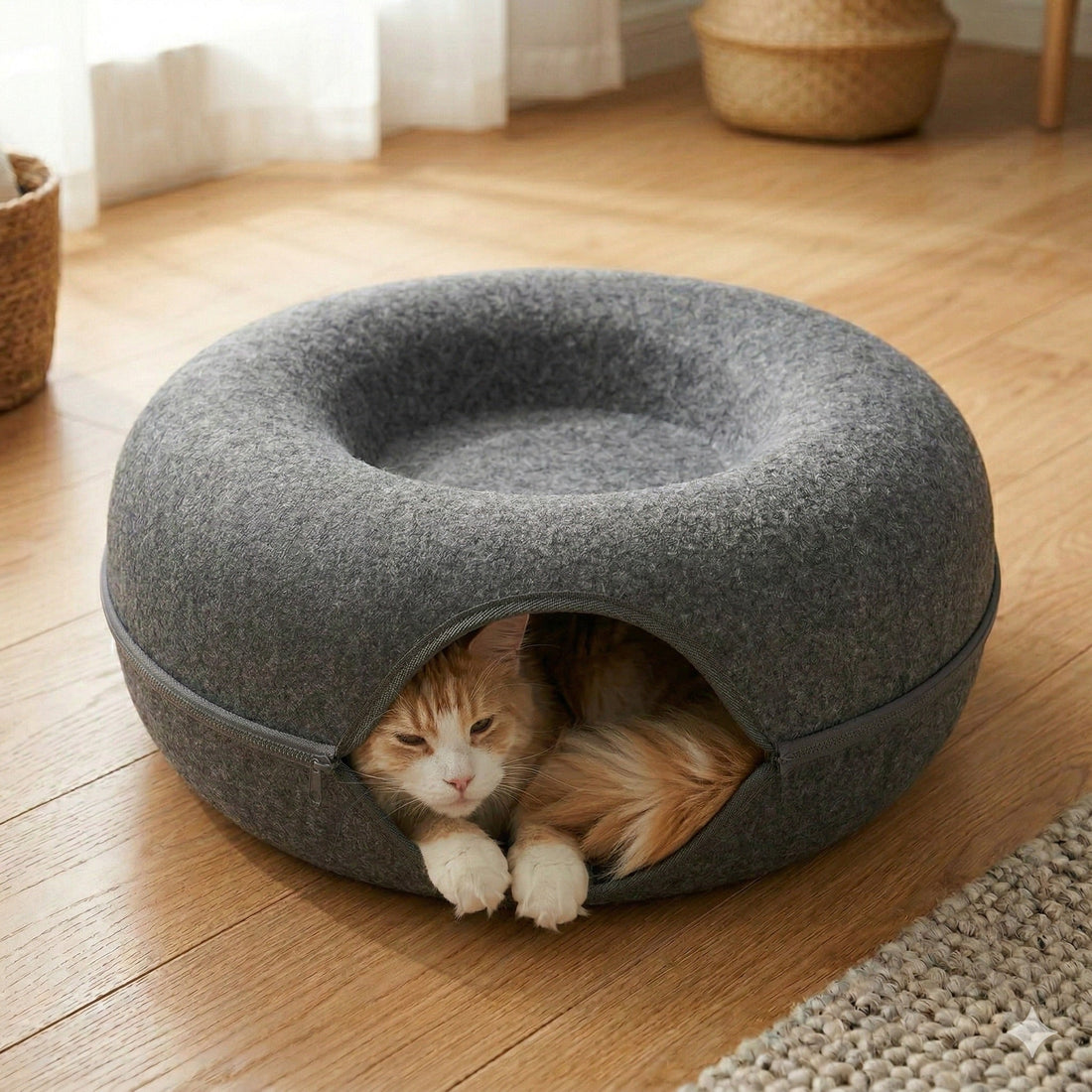
| Cat tunnel bed | Yes | Enclosed + tunnel gives large cats room to stretch while still feeling secure |
 Why Tunnel Beds Work
The tunnel solves a problem cave beds can't
A round cave bed works on the enclosure problem. But it requires a cat to curl into a fairly specific posture to fit comfortably inside — and for a large cat, that posture might not be physically comfortable. You're essentially asking a big cat to compress themselves into a shape designed for a smaller one.
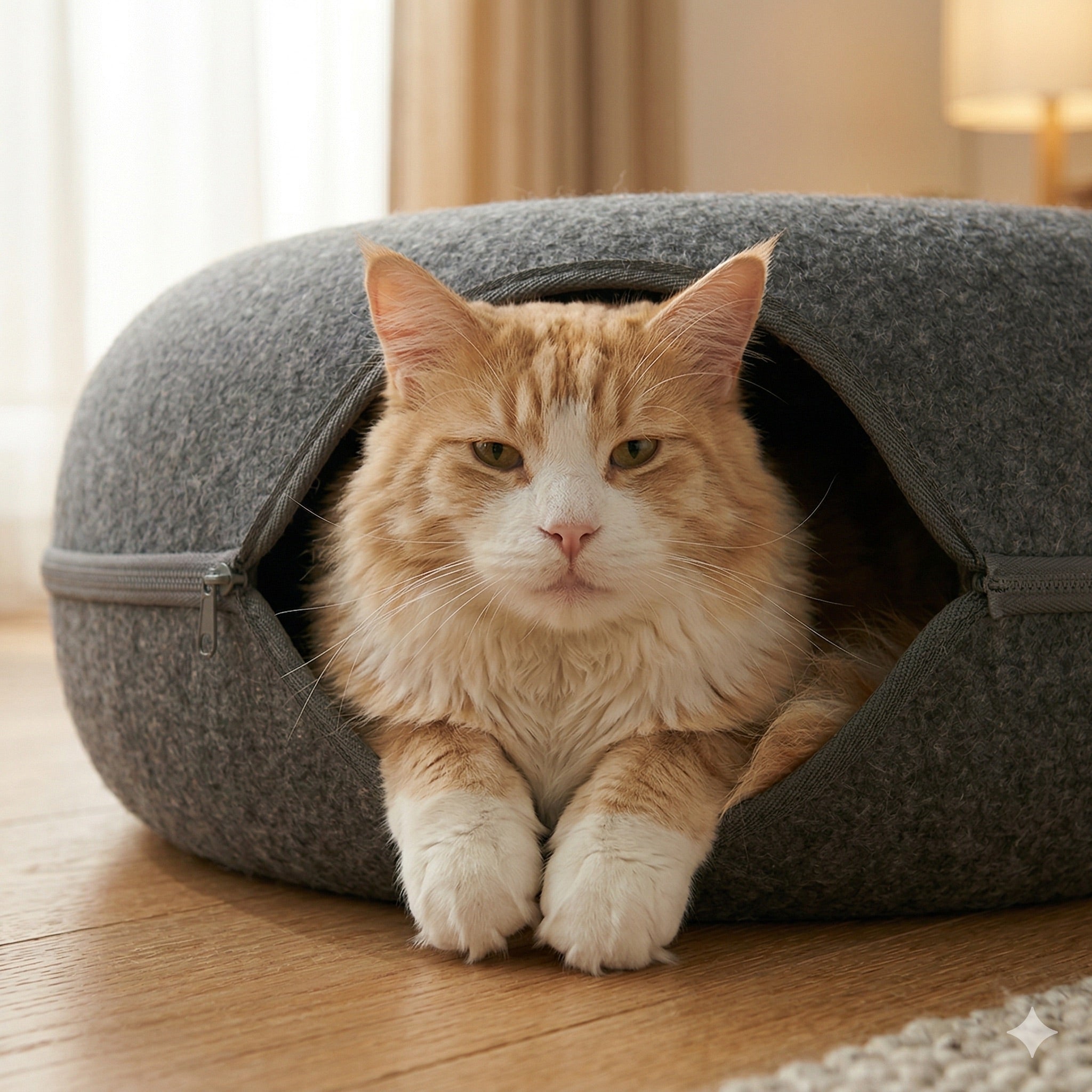
A tunnel bed gives them another option. A large cat can enter partway into the tunnel and settle with some stretch, with the tunnel walls giving them that enclosed feeling on all sides. They don't need to be fully inside a small chamber — they can be half in, positioned however is comfortable, and still feel covered. That's a real structural advantage for bigger cats, not a marketing point.
What Is a Cat Tunnel Bed? Everything You Need to Know goes deeper on how tunnel beds differ from standard cave beds and why cats respond to them the way they do.
Materials & DurabilityLarge cats are heavy users — materials matter more
An 18-pound cat compresses a bed differently than a 9-pound one. If the felt is thin or loosely woven, it'll flatten out and lose its shape within a few weeks of regular use. For large cats specifically, look for high-density felt — the kind that holds a tunnel structure under sustained pressure, not just when it's fresh out of the box.
Washability is also worth thinking about. A large cat who decides a bed is theirs will spend serious time in it, and that bed will need cleaning. Felt that can't handle a gentle wash cycle will shrink or warp the first time you try.
The Cozy Cat Tunnel Bed uses thick wool felt that keeps its shape under regular use and washes without warping. It's one of the reasons large cat owners tend to stick with it once they've tried it — the bed doesn't degrade the way cheaper options do.
If you're also curious about felt safety in general before committing, Are Felt Cat Beds Safe? What to Look For Before You Buy covers what to check.
The Cozy Cat Tunnel Bed
Enclosed, roomy, and sturdy enough for cats who take up real space.
Shop the Tunnel Bed